
Fighting
Survey of Anti-Tank Mine Counter-Measures
This booklet highlights many of the different counter-measures used against anti-tank mines. It also includes any limitations or advantages to each methods. Topics such as "Detection," "Mechanical Detonation," and "Enemy Replies" are also covered in this manual.
Financial Instructions and Standing Orders, 1914
This text is a set of instructions and standing orders regarding paymasters and financial policies in the Canadian Army Pay Corps. Standing orders from an office of authority are put into effect immediately and are in place indefinitely.
Special Tables Physical Training 1914
This booklet has supplementary tables for the Manual of Physical Health, adding detail about subjects that had been left out of the original. These tables were meant to be a guide for superintendents and instructors in setting the recruits' training schedule. The booklet also includes illustrated diagrams to ensure proper form.
Canadian Militia Regulations index
This booklet provides a detailed index to supply-specific references in the Regulations for Supply, Transport and Barrack Services - including such things as bedding, accommodation, fuel and light, and barrack stores.
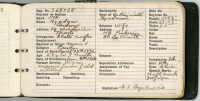
Platoon No. 8 Soldier Information Forms
This booklet of personal information forms was kept by Roy Parker, an officer with the 11th Battalion, Canadian Engineers, during the First World War. Such books allowed platoon leaders to keep track of the soldiers under their command.
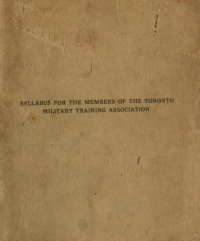
Toronto Military Training Syllabus
This booklet was issued by the Toronto Military Training Association as a 'textbook' for its instructors and members. The booklet covers topics such as "Squad Drills," "Rifle Exercises," and "Firing Instructions."
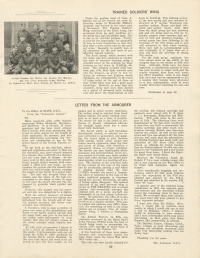
The Armourer
The Armourer O.T.C. was a local newspaper in Brockville, Ontario that published regional and war-related articles. This edition features titles like "Trained Soldiers' Wing" and "Brockville — The Home of the O.T.C."
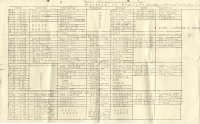
Syllabus of Training
This document is a reserves training schedule for the week of 20 March 1917, divided by day and time with sessions such as physical training, rifle manual, and Lewis gun.
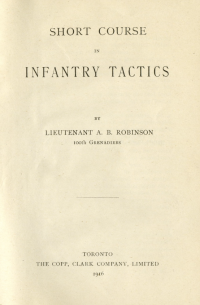
Short Course in Infantry Tactics
Prior to the First World War, Canada's military was quite small and disorganized. This meant that at the outbreak of the war, they needed to educate and train a lot of officers. Lieutenant A.B. Robinson wrote this book as a resource for various ranks of infantry officers which includes, what he believes to be, the most crucial information.
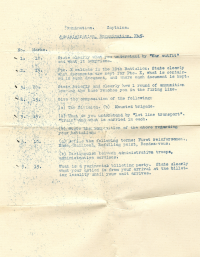
Captains Examination Questions
These documents are the question sheets for the 1916 Captains Examination, with corresponding marks for each question. The test is divided into three categories: (1) Administration, Organization, Etc., (2) Military Law, and (3) Tactics. It is worth noting that the content has been amended to apply to the 142nd Battalion CEF.