
Volunteering was an integral part of the “total war” Canadians experienced during the First and Second World Wars, offering civilians a meaningful and practical way to contribute to the national war…
Volunteering
Introductory Essay
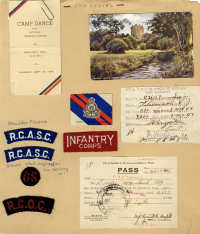
The business sector and war finance
A collection of newspaper articles, telegrams, letters, and photographs relating to Thorold, Ontario, businessman Lloyd Bradley's service in the Second World War with the National War Finance Committee.
Souvenirs from WWII-compressed.pdf
(675.39 KB)
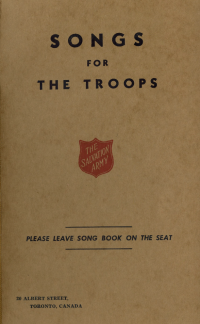
Songs for the Troops
This booklet was printed by the Salvation Army for use in wartime church services in Toronto. It includes many songs, both religious and patriotic, as well as prayers and Bible verses.
Songs for the Troops.pdf
(31.45 MB)
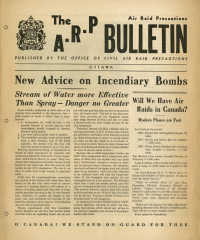
The A.R.P. Bulletin
The A.R.P Bulletin was published by the Office of Civil Air Raid Precautions as a short newspaper that covered regional and war-related topics.
The A.R.P Bulletin.pdf
(11.56 MB)
The A.R.P Bulletin (October, 1942).pdf
(11.71 MB)
The A.R.P Bulletin (November, 1942).pdf
(11.89 MB)
The A.R.P Bulletin (December, 1942).pdf
(23.32 MB)
The A.R.P Bulletin (April, 1943).pdf
(24.05 MB)
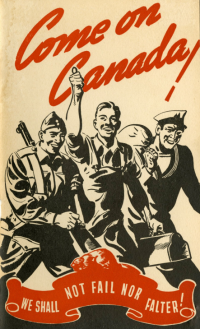
Come on Canada!
This booklet, published by the Institution of Financial Education, encouraged Canadians to support their country by investing in War Savings stamps and certificates.
"This is a war to the death. Every dollar we can spare above our absolute needs must be loaned to our country." This message is illustrated using the short story, The Richest Man in Babylon Tells His System, which attributes one man's financial success to smart investments that earned good interest.
Come on Canada (1938).pdf
(19.53 MB)
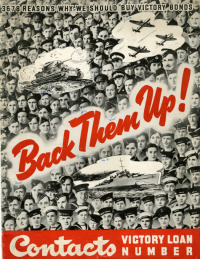
Back Them Up!
Back Them Up! was a magazine published by the T. Eaton Company in 1942. The magazine lists the names and photos of Eaton employees who had enlisted in the Canadian Armed Forces during the Second World War. This document aims to show appreciation for the men and women who enlisted, but it also served to persuade the readers at home to purchase victory bonds. "Seize Your Patriotic Opportunity Now and Buy Victory Bonds!"
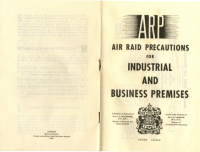
ARP: Air Raid Precautions for Industrial and Business Premises
This training manual was published by the Air Raid Precautions (ARP) Organization to protect Canadian industrial facilities and their workers. This manual refers to a real-life air raid (the "Amazing Summer" in Britain, 1940) in order to teach individuals what to expect, and what to do, in the event of an enemy attack.
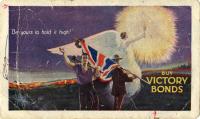
Buy Victory Bonds
This used ink blotter was distributed during one of the Victory Loan campaigns of the First World War.
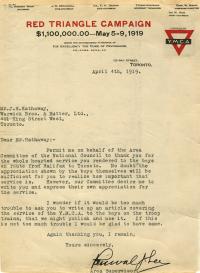
Special Troop Train No. 8
J.H. Hathaway of the Y.M.C.A. provided assistance on a troop train from Halifax to Toronto following demobilization. The group travelling on troop train No. 8 was so grateful for his service that they sent Hathaway a letter with their signatures, and he also received praise from the Y.M.C.A.
Hathaway YMCA Correspondence.pdf
(6.96 MB)
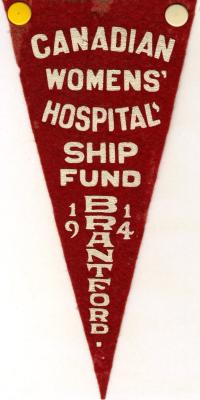
Brantford's Hospital Ship Fund
On 9 August 1914, the city of Brantford, Ontario, kicked off its Old Home Week, which quickly turned into a fundraising opportunity for the war effort. The Brantford chapter of the Imperial Order Daughters of the Empire (IODE) raised $500 during tag day for the Hospital Ship Fund.
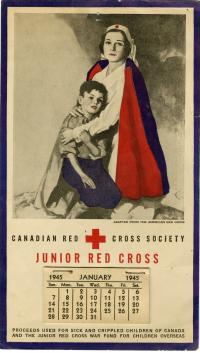
Junior Red Cross Calendar
This calendar, produced by the Canadian Red Cross Society, generated proceeds for the care of "sick and crippled" children in Canada, as well as to help the efforts of the Junior Red Cross War Fund for Children overseas.
Red Cross Calendar.pdf
(2.15 MB)