
Shopping
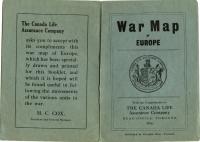
Canada Life Assurance
Soldiers travelling in 1914, were given a chance to buy a life policy with the Canadian Life Assurance Company. This ad also provided a free war map to soldiers.
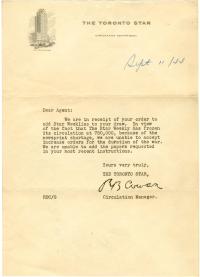
The Toronto Star: "unable to accept increase orders for the duration of the war."
The Toronto Star had to do its best to produce as many Star Weekly issues with the available paper during the war. However, in this communication by R.B Cowan, the Toronto Star's circulation manager, explains that they are unable to increase orders above 750,000 copies.
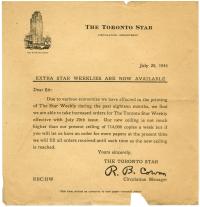
The Toronto Star Communication on Extra Star Weeklies Available
In light of rationing measures that affected paper, the Toronto Star had difficulty producing as many issues as it had done in the past. Nevertheless, this communication from R.B Cowan, the Toronto Star's circulation manager explains that a small increment in orders for the weekly issue of July 29th is possible, just not exponentially more than the 714,000 copies that were already being made each week!
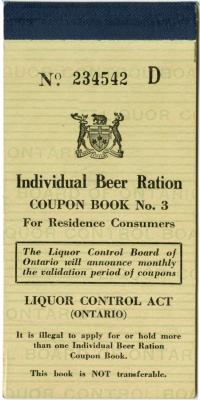
Individual Beer Ration
During the Second World War Canadians would have had to use a ration coupon book just like this one to purchase beer.
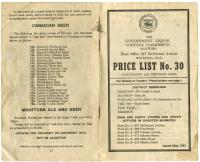
Price List No. 30 of the Government Liquor Control Commission of Manitoba
The Government Liquor Control Commission of Manitoba published periodical lists on the legal prices of liquor in accordance with the Liquor Control Act of 1928 and wartime measures on alcohol prices and concentrations.
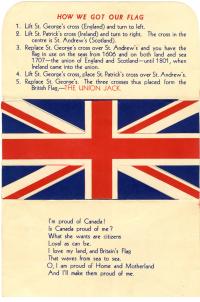
The History of our Flag
Laura Secord Candy Shops created a line of patriotic advertising novelties featuring pieces of information on Canadian British history, This example gave a short historical description of how the Union Jack came into existence.
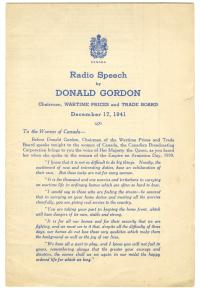
Here is One Big War Job Which You Alone Can Do
In another message to the women of Canada, Donald Gordon, the Chairman of the Wartime Prices and Trade Board, he asks of homemakers around the country to "determine whether the most valuable use is being made of the materials, manpower, and factories". In this radio message Gordon asked women across Canada to make a list of commodities, note their quality, write down their prices, and keep this list in mind when shopping to ensure that "ceiling prices" were maintained.
Wartime Rent Controls
During the Second World War, the Wartime Prices and Trade Board worked to ensure consumer protections for all Canadians, as well as establishing price and inflation control measures - including rent controls on housing accommodation and shared accommodation during wartime.
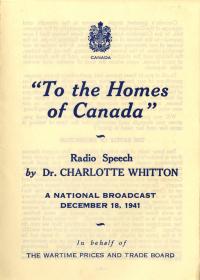
"Guardians of our hearths"
Speaking to the women who controlled four out of every five dollars spent in Canada, Charlotte Whitton explained inflation, price controls, and the power that women could exercise to help with the war.
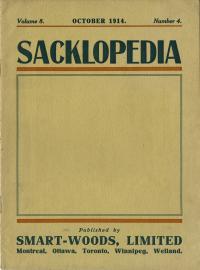
The war so far ...
Smart-Woods was one of Canada's biggest manufacturers of bags, cloth, canvas, and clothing, but its products were barely mentioned in this advertising magazine, which offered a statistical compendium of the nations involved in the First World War.